Children are not small adults. It is a phrase repeated in every paediatric medicine textbook, and it is just as true in orthotics. Working with a child who has cerebral palsy, clubfoot, a spinal deformity, or a limb difference requires a different clinical approach, a different communication style, and a different understanding of what success looks like — not just today, but across the arc of a child’s development.
In Pakistan, paediatric orthotics is a field with enormous need and enormous opportunity. This article explores some of the key conditions, clinical principles, and practical realities that shape paediatric orthotic practice in our context.
The Paediatric Caseload in Pakistan
Orthotists working in Pakistan encounter a paediatric caseload that reflects both the epidemiology of the country and the gaps in preventive and early intervention services. The most common conditions include:
Clubfoot (Congenital Talipes Equinovarus): Pakistan has one of the highest rates of clubfoot in the world, with estimates suggesting that nearly 10,000 children are born with the condition each year. The Ponseti method — a non-surgical treatment using serial casting followed by bracing — has transformed outcomes globally, and it is increasingly available in Pakistan through dedicated programmes. The orthotic component of Ponseti treatment, the foot abduction orthosis (FAO), is simple in concept but requires careful fitting and, crucially, sustained family engagement to be effective.
Cerebral Palsy: CP is the most common cause of physical disability in childhood globally, and Pakistan is no exception. Spastic diplegic and hemiplegic presentations are most common in orthotics clinics. Ankle-foot orthoses are the most frequently prescribed device, but the prescription is rarely straightforward — the right AFO depends on the pattern of spasticity, the degree of voluntary motor control, the functional goals, and the child’s age and growth trajectory.
Polio sequelae: Despite Pakistan’s progress on polio eradication, there remains a significant population of adults and older children living with post-polio sequelae — and new cases continue to appear. Callipers and knee-ankle-foot orthoses remain essential devices for this group.
Spina bifida: Open spina bifida (myelomeningocele) results in varying degrees of lower-limb paralysis, sensory loss, and associated conditions. The orthotic requirements range from AFOs for children with sacral-level lesions to hip-knee-ankle-foot orthoses and parapodiums for those with higher-level lesions.
Congenital limb differences: Partial limb absence, limb length discrepancy, and congenital limb deformities present complex and fascinating challenges that sit at the intersection of orthotics and prosthetics.
Clinical Principles in Paediatric Practice
Growth Changes Everything
A child’s anatomy, biomechanics, and neurological development are constantly changing. An AFO that fits perfectly today will need replacing in six to twelve months — often sooner in younger children. This is not a problem; it is the nature of the work. But it requires planning: families need to understand why devices need replacing, funding pathways need to accommodate growth, and clinicians need to schedule reviews proactively rather than waiting for the family to return when the device no longer fits.
Beyond size, growth brings skeletal changes. The foot architecture of a two-year-old is dramatically different from that of a seven-year-old, and the orthosis needs to accommodate these changes. A device designed to correct a deformity must apply forces that are appropriate to the bone’s current state and likely trajectory. Too little force and the correction is insufficient; too much and you risk growth plate damage or iatrogenic deformity.
The Parent or Caregiver Is Your Co-Clinician
In paediatric orthotics, the parent or caregiver is not peripheral to the clinical process — they are central to it. They apply the orthosis every morning, manage skin care, observe any problems, and decide whether the child wears the device or not. A technically perfect AFO that the family cannot don and doff correctly, or that the child refuses to wear because it is painful, will fail regardless of its design.
Invest time in parent education. Demonstrate donning and doffing thoroughly, not just once but until you are confident the caregiver can do it independently. Provide written instructions with pictures where possible. Explain clearly what the device should and should not feel like, and what warning signs require them to return immediately rather than waiting for their next appointment.
In Pakistan, literacy levels and language differences mean that verbal and visual communication are especially important. Where a family speaks a language other than Urdu or the local dominant language, an interpreter — ideally one who understands the medical context — is essential.
Functional Goals, Not Just Structural Correction
It is tempting to focus on what the orthosis looks like on a radiograph or measurement chart. Does the equinus deformity correct to neutral? Has the valgus knee improved? These are valid measures, but they are not the whole picture. The question that matters most to the family — and ultimately to the child — is: what can she do now that she could not do before?
Frame your treatment goals in functional terms. Not “achieve 5° of dorsiflexion” but “be able to walk to school without falling.” Not “correct the spinal curve by 10°” but “sit comfortably for a full school day.” Functional goal-setting also makes it easier to assess whether treatment is working, because progress is visible in real life rather than only measurable in the clinic.
Clubfoot: The Ponseti Method and the Orthosis
The Ponseti method has an overall success rate of over 90% in correcting clubfoot without surgery when applied correctly. Serial plaster casts are applied weekly or bi-weekly over four to eight weeks, progressively correcting the components of the deformity in a specific order: cavus, adductus, varus, and finally equinus (corrected with a percutaneous Achilles tenotomy in approximately 80% of cases). Once correction is achieved, the foot abduction orthosis is applied.
The FAO consists of two shoes or sandals set at 60–70° of external rotation on the affected side (45° on the unaffected side in bilateral cases), connected by a bar at shoulder width. The child should wear it 23 hours a day for the first three months, then during night-time and naps until the age of four or five.
The most common reason for relapse is failure to wear the brace consistently. This is almost always a compliance issue rather than a device issue. Families need to understand that the casting corrects the foot, but the brace is what prevents it from returning to its original position. Without the brace, relapse rates approach 80%. With consistent brace wear, they fall below 10%.
As an orthotist, your role in Ponseti treatment extends beyond making the brace. You need to check fit at every visit — the heel must be well seated in the shoe, the foot must not be able to escape the correction during sleep, and the bar must be at the correct length. You also need to check for pressure sores, especially around the malleoli and the dorsum of the foot.
Cerebral Palsy: Matching the AFO to the Child
The AFO prescription in cerebral palsy is one of the most nuanced areas of paediatric orthotics. The range of presentations is vast, from a mildly hemiplegic child who walks independently to a severely affected child who is non-ambulant. The goals of intervention vary accordingly.
For ambulant children with spastic hemiplegia or diplegia, the most common orthotic goal is to manage equinus — the tendency of the ankle to plantarflex due to spasticity in the calf muscles. But the type of AFO matters enormously:
A solid AFO blocks all ankle motion. This is appropriate when ankle plantarflexor spasticity is severe and the child has little or no voluntary dorsiflexion control. It improves stability and reduces the energy cost of gait but removes the natural ankle rocker mechanism.
A hinged AFO allows sagittal plane ankle motion, typically with a dorsiflexion stop or a posterior spring. This is appropriate for children with some voluntary motor control and can better support the normal gait pattern. It is biomechanically superior in many cases but requires more careful alignment.
A ground reaction AFO (also called a floor reaction AFO) is used when knee hyperextension or excessive knee flexion in stance is the primary problem. It provides a forward-directed force at the tibia that controls knee motion indirectly.
Dynamic AFOs — thin, flexible shells that allow some movement while still providing guidance — are appropriate for children with mild spasticity and good motor control.
The key is matching the device to the specific biomechanical problem, the child’s motor function, and their daily activities. Prescribing the same AFO for every child with CP because it is familiar is not good practice.
Working Within Resource Constraints
Paediatric orthotics in Pakistan often means working with limited materials, limited fabrication equipment, and families with limited financial resources. This requires creativity and prioritisation.
For Ponseti FAOs, locally fabricated bars and adapted footwear can be effective when commercially produced devices are unavailable or unaffordable. The critical variables — shoe orientation, bar length, fit of the heel in the shoe — can be achieved with local materials provided the orthotist is trained in the method.
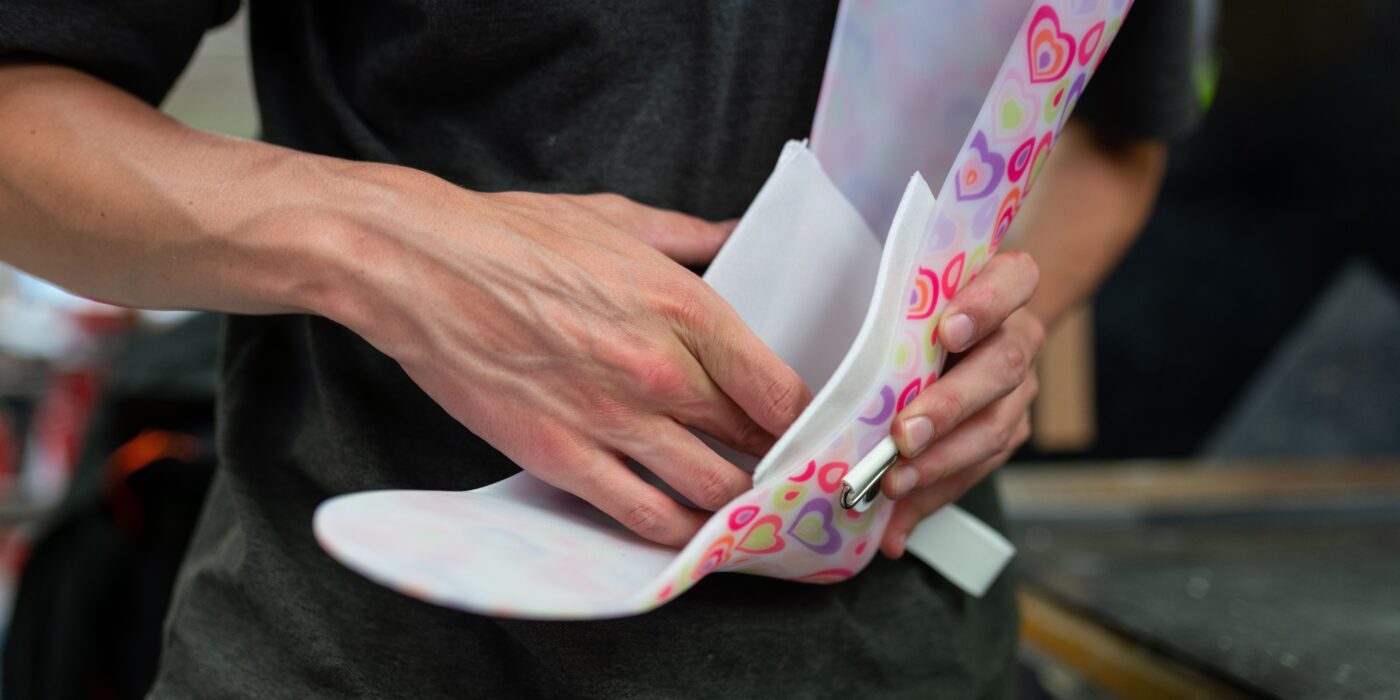
For AFOs, polypropylene remains the most practical and affordable material for the majority of clinical situations. Knowing how to work polypropylene well — including trimline variation, padding, and spot modification — allows a single material to meet a wide range of clinical needs.
OPPAK Academy’s resource library includes fabrication guides for Ponseti FAOs and a range of paediatric AFO designs using locally available materials. We also run hands-on fabrication workshops designed for the clinical context in Pakistan.
Looking Forward
Paediatric orthotics in Pakistan is a field in transition. The Ponseti programme has already transformed outcomes for children with clubfoot in parts of the country. Increasing awareness of CP and other neurodevelopmental conditions is driving demand for orthotic services. Training programmes, though still limited in number, are producing a new generation of orthotists with stronger clinical foundations.
The challenge — and the opportunity — lies in scale. The need is enormous and the specialist workforce is still small. Every orthotist who develops strong paediatric skills, mentors a student, or shares their clinical experience with colleagues is making a contribution that extends far beyond their own clinic.
This article is part of the OPPAK Academy Blog series. OPPAK Academy offers CPD workshops on paediatric orthotics including Ponseti technique, AFO prescription in cerebral palsy, and hands-on fabrication training. Visit oppak.org for upcoming dates.
Back to Blog