
You completed your diploma or degree in orthotics and prosthetics. You are working in a clinic, seeing patients, making devices, solving problems. But what comes next? How do you grow as a clinician, advance your career, and stay current in a field that is changing rapidly? And how do you do all of this within the specific context of O&P practice in Pakistan?
These are questions we hear constantly at OPPAK Academy. This article addresses them directly, with practical guidance on continuing professional development, career pathways, and how to make the most of the resources and opportunities available to you.
Why CPD Matters More Than Ever
The O&P field is not static. New materials, fabrication techniques, and technology emerge regularly. Evidence on clinical effectiveness — which device designs work, for which patients, in which conditions — is growing. International guidelines on conditions like cerebral palsy, diabetes-related amputation, and spinal cord injury are updated periodically. A clinician who stops learning after qualification is quickly working from an outdated evidence base.
Beyond staying current, CPD is increasingly a professional requirement globally. International standards bodies and national regulatory frameworks in many countries require documented evidence of ongoing learning. As Pakistan’s O&P sector professionalises, similar expectations are likely to become formalised. Clinicians who develop the habit of CPD now will be well positioned as those frameworks develop.
There is also a simpler, more immediate reason: patients benefit when their clinician keeps learning. A prosthetist who has recently deepened their knowledge of socket design will make a better socket. An orthotist who has just attended a workshop on paediatric AFO prescription will write a better prescription. The connection between your professional development and your patient outcomes is direct and real.
Understanding Your Starting Point
Before planning your CPD, it is worth honestly assessing where you are. What are your clinical strengths? Where do you feel least confident? What types of patient presentations challenge you most? Asking these questions is not a sign of weakness — it is the hallmark of a reflective practitioner, which is what CPD is built on.
Some frameworks for self-assessment include:
The Johari Window: A simple tool for distinguishing between what you know, what you know you don’t know, and what you don’t know you don’t know. The third category — your blind spots — is the most dangerous clinically, and peer feedback and structured review are the best ways to surface it.
Competency frameworks: The International Society for Prosthetics and Orthotics (ISPO) has developed competency standards for O&P professionals at Category I and Category II levels. Reviewing these frameworks against your own practice can highlight areas for development.
Patient outcome reflection: Look at the patients you see regularly. Are there patterns in the ones who do not progress as expected? Are there device types you are less comfortable fabricating or prescribing? These patterns point directly towards learning priorities.
CPD Pathways Available in Pakistan
Formal Postgraduate Education
A small but growing number of postgraduate options are available to O&P professionals in Pakistan. Some universities offer postgraduate diplomas or master’s programmes in rehabilitation science, allied health, or related fields. While full-time postgraduate study is not feasible for most working clinicians, part-time and distance learning options are increasing.
International postgraduate programmes — particularly those offered online by universities in the UK, Germany, Canada, and Australia — are accessible to Pakistani clinicians with sufficient English language proficiency. These can be challenging to fit around clinical work but offer significant career benefits and international recognition.
Short Courses and Workshops
For most working clinicians, short courses and workshops are the most practical and accessible form of CPD. OPPAK Academy offers a range of short courses covering clinical skills, fabrication techniques, and specialist areas such as paediatric orthotics, diabetic foot management, and upper-limb prosthetics.
When evaluating a short course, ask: does the content address a real gap in my practice? Is the teaching evidence-based? Will I leave with practical skills I can apply immediately? A well-designed one-day workshop can deliver more useful learning than a poorly designed week-long course.
Online Learning
Online learning has expanded enormously in the past five years, and O&P is no exception. OPPAK Academy’s Online Learning Centre provides structured modules on a range of clinical topics, available at any time and designed to fit around clinical commitments. International resources include ISPO’s online offerings, the American Orthotic and Prosthetic Association’s (AOPA) educational library, and university open courseware from institutions with strong O&P programmes.
The key to effective online learning is active engagement. Reading or watching passively is less effective than taking notes, completing assessments, applying what you learn in clinic, and reflecting on the results. Build online learning into your routine — even thirty minutes a week adds up to over twenty-five hours a year.
Peer Learning and Clinical Supervision
Some of the most valuable learning happens between colleagues. Regular case discussion — where clinicians present challenging patients, share their reasoning, and receive structured feedback — is a powerful learning format that requires no travel, no budget, and no external faculty. It is also highly relevant, because the cases are your real patients.
If your workplace does not already have a regular case discussion meeting, consider proposing one. Even a monthly thirty-minute informal discussion with two or three colleagues builds reflective practice habits that improve clinical decision-making.
Clinical supervision — structured support and feedback from a more experienced practitioner — is standard in many allied health professions internationally but less common in O&P in Pakistan. Where it is available, embrace it. Where it is not, seek out a mentor informally. Identify a senior clinician, a faculty member from your training institution, or an experienced practitioner you respect, and ask if they would be willing to review a case or provide feedback occasionally.
International Conferences
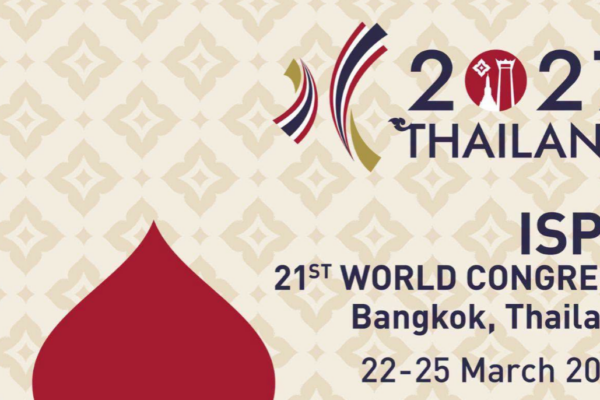
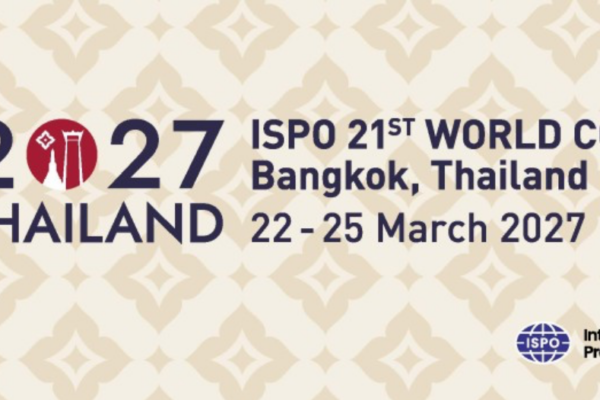
The ISPO World Congress, held every three years, is the flagship international conference for the O&P profession and attracts clinicians, researchers, engineers, and policy-makers from around the world. ICPO 2027, being organised by OPPAK in Islamabad, will bring this level of international engagement directly to Pakistan — an extraordinary opportunity for Pakistani clinicians to engage with the global profession without the cost and complexity of international travel.
Regional conferences and the annual ISPO national member society meetings also provide access to current research and clinical practice, as well as networking with colleagues facing similar challenges.
Planning Your CPD Year
CPD is most effective when it is planned rather than accidental. At the start of each year, identify two or three specific learning goals based on your self-assessment. For each goal, identify specific activities — a course, an online module, a book, a supervision session — that will contribute to it. Track what you do and reflect on what you learn.
A simple CPD log does not need to be elaborate. A spreadsheet or even a notebook with date, activity, learning outcomes, and reflection is sufficient. The act of writing a reflection — even a few sentences — significantly increases the learning you extract from an experience.
Sample CPD goals for an orthotist:
- “Improve my AFO prescription for children with spastic diplegia — complete the OPPAK paediatric orthotics module, attend the hands-on workshop in June, and present one complex paediatric case at our monthly case discussion by October.”
- “Better understand diabetic foot management — read the International Diabetic Foot Working Group guidelines, complete the OPPAK online module on diabetic foot orthoses, and discuss with the podiatry team at my hospital.”
Career Pathways in O&P in Pakistan
The career landscape for O&P professionals in Pakistan is changing. Pathways that did not exist ten years ago are opening up, and clinicians who invest in their development now are well positioned to take advantage.
Clinical specialisation: Developing recognised expertise in a clinical area — paediatrics, sports rehabilitation, upper limb, spinal orthotics — creates professional identity and makes you more valuable to employers and referrers. Specialisation does not require a formal credential, though these are valuable where available; it is built through focused practice, deliberate learning, and a reputation for quality.
Clinical education: Teaching is one of the most effective ways to deepen your own learning, and there is a significant need for skilled clinical educators in Pakistan’s O&P training programmes. Whether as a part-time lecturer, a clinical placement supervisor, or a workshop facilitator, teaching draws on and strengthens your clinical expertise.
Management and leadership: O&P services are expanding in Pakistan, and skilled clinical managers are needed. If you have an interest in service development, team leadership, or organisational management, developing skills in these areas — through courses, mentorship, or additional roles — creates a distinct career pathway.
Research: O&P research in Pakistan is at an early stage, which means the opportunities are wide open. Even small-scale clinical research — an audit of your own patient outcomes, a case series, a literature review on a clinically relevant topic — can contribute meaningfully to the evidence base and to your own professional profile.
International roles: NGOs, international rehabilitation organisations, and global O&P programmes are active in Pakistan and across the region. Clinicians with strong clinical skills and English language proficiency have opportunities in project management, training, and clinical service delivery roles with these organisations.
OPPAK Academy and Your Development
OPPAK Academy exists precisely to support the professional development of O&P clinicians in Pakistan. Our programmes are designed for the context you work in — not imported wholesale from high-income settings, but adapted to the caseload, the resources, and the challenges of practice in Pakistan.
We would encourage every clinician, whether newly qualified or highly experienced, to engage with OPPAK Academy’s resources. Use our Online Learning Centre. Attend our workshops. Share your clinical experience through our blog and case discussion forums. Connect with colleagues across the country.
The O&P profession in Pakistan is building something important. Every clinician who invests in their own development is part of that.
This article is part of the OPPAK Academy Blog series on career development for O&P professionals. To find out about upcoming courses, workshops, and mentorship opportunities, visit oppak.org or contact us at Contact@oppak.org.
Back to Blog